
At first glance, Roofman sounds like the kind of true-crime adaptation designed to go down easy with the audience: it’s a fun, quirky real story, with a charming charismatic lead, and just enough criminality to feel edgy without being too bleak. For about half of it, Roofman is just like this. But beneath all of this, Roofman reveals itself to be something quieter and more thought-provoking.
Roofman is based on on the true story of Jeffrey Manchester, a former Army reservist who would rob McDonald’s franchises by cutting holes through their roofs and being oddly polite to the workers. Roofman frames Jeffrey as not a menacing man, but instead as an odd man who’s molded by loneliness, routine and a strange, child-like desire to control. Channing Tatum plays Jeffrey so well, giving him a surprising amount of restraint. It’s one of his best performances of his career and keeps you latched onto the movie for its runtime.
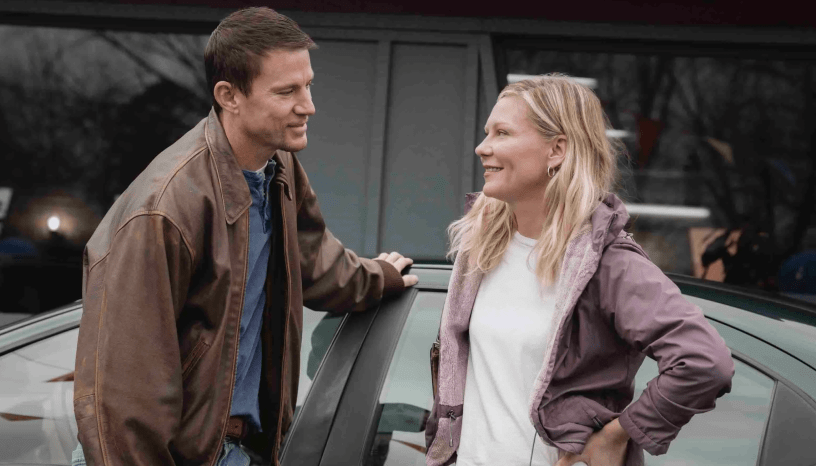
The film follows Manchester’s life on the margins. Through his planning, his unconventional and odd methods, then his relationship with Leigh, played by the amazing Kirsten Dunst. Their relationship becomes the emotional backbone of Roofman, as it offers a glimpse of the life Jeffrey might have had if he lived an honest life. Dunst’s performance is extremely essential to the movie and she’s the engine to Tatum’s magnetic performance
Director Derek Cianfrance, with his first film in nearly a decade, approaches Roofman with that patience and empathy that defines his career’s work. Roofman is not paced like a thriller, with no chase sequences of over-the-top heist sequences. The film almost mirrors Jeffrey’s life of rinse & repeat with a methodical approach.
Visually, Roofman is stunning. Shot completely on film, the colours are muted but still contrasting color palette is muted. The usage of film and a handheld approached gives the film an almost lived-in quality that grounds it. Rooftops, crawlspaces, and storage rooms become liminal spaces, almost a reflection Manchester’s own limbo between freedom and isolation. Roofman finds a lot in this overlooked areas, suggesting that Manchester’s crimes are less about the money but rather abut making a space where he’s got control.
Once Roofman ends, it hasn’t made a grand statement, life lesson or a shocking revelation. It instead leaves you with a feeling of melancholy, and its kind of peaceful and beautiful. This is one of TIFF’s finest films that everyone needs to see.

