
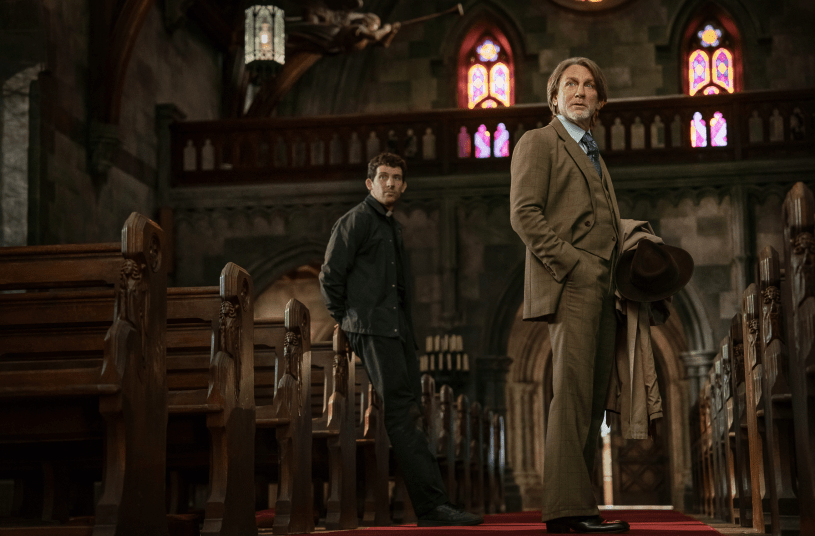
Rian Johnson returns to the world of Benoit Blanc with Wake Up Dead Man, the third installment in the Knives Out series, and the result is a film that is both familiar and subtly more ambitious than its predecessors. Where the first two entries thrived on cozy yet twisted murder mysteries and sparkling ensemble chemistry, this outing shifts the stakes — and the tone — without sacrificing the franchise’s signature wit.
The film centers on a highly publicized disappearance of a controversial televangelist, whose sudden vanishing triggers suspicion, scandal, and the inevitable need for Blanc’s deductive brilliance. Daniel Craig reprises his role with the easy authority fans expect, bringing a quiet gravitas that balances the film’s more comedic and chaotic elements. Blanc is, as ever, the lens through which the audience navigates the absurdities and moral complexities of the story.
From the opening, Johnson makes it clear that he’s not merely repeating the formula. Wake Up Dead Man leans darker than its predecessors, exploring themes of faith, power, and public perception. Yet, it remains playful, balancing tense investigation with smartly timed humor. The film revels in its absurdities — from eccentric relatives and bizarre alibis to televised scandals that spiral into satire — without undermining the stakes of the central mystery.
The ensemble cast is robust, featuring a mix of returning actors and new faces who embody the kind of deliciously over-the-top characters that Knives Out thrives on. Performances are uniformly strong: each actor seems to relish the opportunity to engage in the verbal dueling and physical comedy that Johnson choreographs so effectively. Character interactions are sharp and often the source of the film’s best laughs, providing levity without diminishing the tension of the investigation.
Johnson’s direction continues to shine in his handling of visual storytelling. The mise-en-scène is carefully crafted to create clues, misdirections, and visual gags. Every corner of the televangelist’s sprawling estate seems to contain a secret, a hint, or a trap for the unwary — and the camera is never complacent, guiding the audience’s attention in playful ways. Cinematographer Steve Yedlin’s work ensures that even comedic moments retain cinematic weight, framing slapstick and farce with precision.
Where the film distinguishes itself is in its thematic ambition. The mystery serves as a vehicle to explore the cult of personality, the manipulation of media, and the moral compromises inherent in public life. These elements add depth to the franchise without slowing it down, allowing Johnson to maintain pacing while introducing commentary that resonates beyond the immediate whodunit.
The script, co-written by Johnson, is full of clever twists and unexpected turns, though some plot beats occasionally strain credulity. A few subplots feel slightly overextended, and certain reveals are telegraphed for fans familiar with franchise conventions. Yet the film’s charm and ingenuity are sufficient to offset these minor issues, and the ultimate resolution is satisfying both intellectually and emotionally.
Wake Up Dead Man also benefits from a more reflective undertone. While previous entries leaned heavily on the delight of trickery and surprise, this installment is willing to linger on the consequences of deceit and the ambiguities of justice. It adds a subtle layer of maturity to the franchise — a recognition that mysteries are not just puzzles, but reflections of human foibles and societal dysfunction.
In sum, the film is clever, dark stylish, and enjoyable, the latest Knives Out entry maintains the franchise’s humor and ingenuity while expanding its moral and thematic scope. Fans will appreciate the balance of familiarity and novelty, while newcomers can enjoy a tightly plotted, well-acted, and surprisingly thoughtful murder mystery. It’s a smart, entertaining addition to the franchise that combines suspense, satire, and sharp ensemble work, classic Knives Out fun with an added layer of sophistication.
 One Take News