
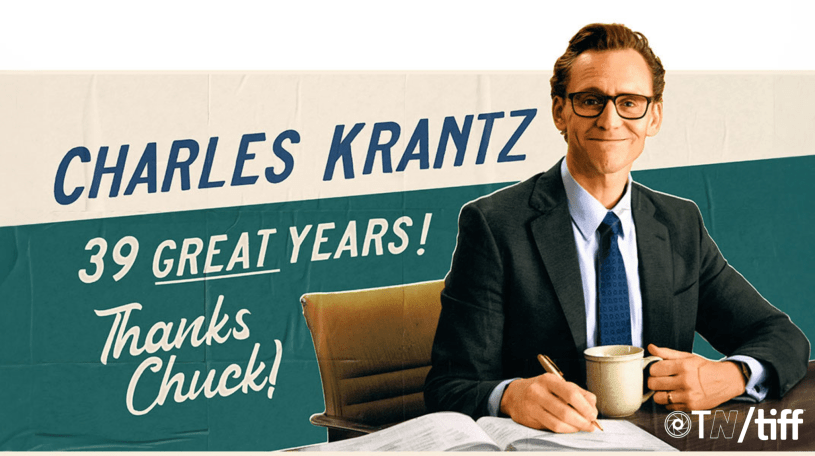
Mike Flanagan is one of the most highly regarded filmmakers working today. Every industry professional I’ve spoken to about him has tremendous amounts of respect for the man, particularly for his unwavering commitment to staying true to the source material, his treatment of his cast and crew, and his passion for the craft of filmmaking. So, when his latest film, The Life of Chuck, was announced to be part of the TIFF ‘24 lineup, it instantly went into my top ten most anticipated films of the fest. When I watched it on that fateful Saturday morning at the Princess of Wales Theatre, I knew that not only was I voting for this to win the People’s Choice Award (something I predicted correctly for the following week), but that I had just witnessed the magnum opus of one of our best filmmakers.
The Life of Chuck is the latest adaptation of a Stephen King story and Flanagan’s first non-horror work. The results are incredible. Chuck is a brilliant and beautiful story, told in a very unconventional format. It showcases how one can live life to the fullest and the importance of appreciating all the people we meet and the things we see. At the time of this review being published, it still, somehow, has no distributor. That better change soon.
I believe that Mike Flanagan, along with Gary Dauberman and Frank Darabont, is one of three working filmmakers who truly gets Stephen King and his stories. For his third adaptation from the legendary author, he chose a non-horror story, a first for his King stories and his career in general. The results are astounding, and it’s seen in his writing, direction, and editing. Flanagan has a knack for setting up stories with heavy, heavy exposition that requires you to pay attention. While this turns some people off his work, the payoff is emotionally profound and cathartic. Chuck might exemplify this tactic the best, causing me and my friend to suffer emotional breakdowns multiple times throughout the film. Flanagan’s approach to the film’s narrative, telling the story backward, starting with Act 3, is integral to capturing this visceral feeling. His script is some of the best work he’s done, tying up every storyline and allowing for the narrative to flow seamlessly. It’s an easy frontrunner for Best Adapted Screenplay at the Oscars. Through his directional choices, pacing, and editing, the film never overstays its welcome and you realize that no other filmmaker could have adapted this story as beautifully as Mike Flanagan.
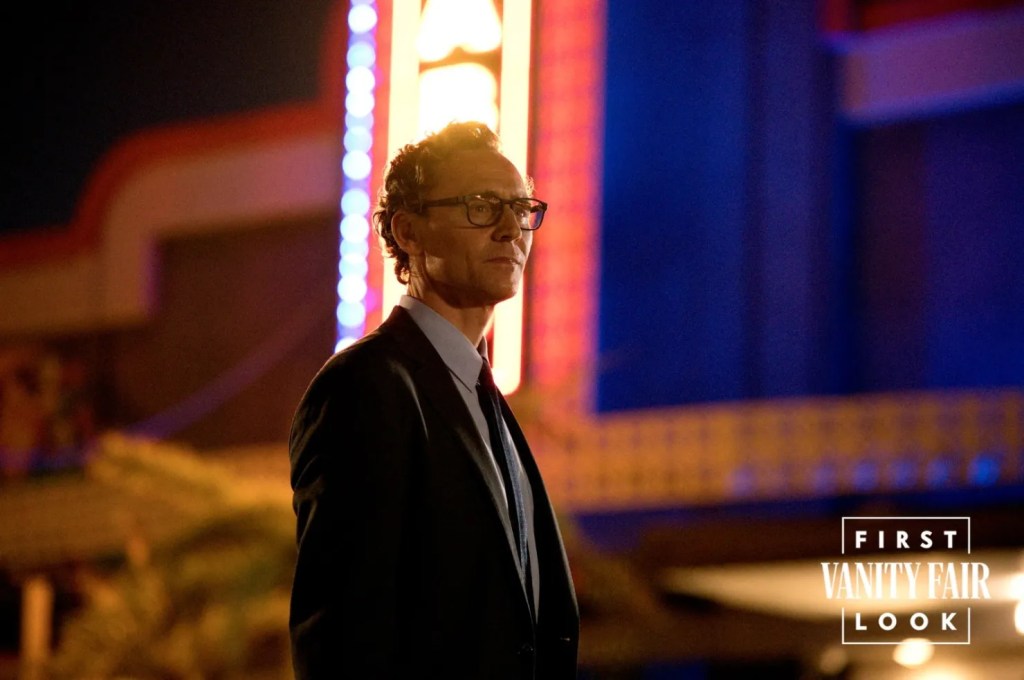
The story hails from Stephen King’s 2020 novella If It Bleeds, with The Life of Chuck being one of the short stories in the book. Chuck is told backwards, starting with Act 3 and ending with Act 1. It’s almost as if Flanagan shot and cut the movie together chronologically, then sliced it into thirds and rearranged it. Surprisingly, this storytelling format not only works but is integral to Chuck’s success. It gives every little detail in the film so much more meaning the further back into Chuck’s life you go. It’s not going to work for everyone, but I wouldn’t have this movie any other way. Flanagan is always experimenting, and trying new things and he always hits the mark.
The cast of Chuck might be the most star-studded Flanagan has ever worked with. Tom Hiddleston, Karen Gillian, Chiwetel Ejiofor, Mark Hamill, Jacob Tremblay, Matthew Lillard, Heather Langenkamp, David Dastmalchian, Kate Siegel, Hamish Linklater, and Nick Offerman, among others, are part of this all-star level ensemble. Hiddleston, Tremblay, and newcomer Benjamin Pajak all deliver outstanding performances as different versions of Charles “Chuck” Krantz throughout his 39-year life. Surprisingly though, it’s Mark Hamill who is a true standout and bright light in this cast. While there’s some personal bias here due to Hamill being a hero of mine, as well as my lifelong love for Star Wars and Batman, his role as Chuck’s grandfather is a key one in the back half of the film, delivering many emotional lines, profound moments, and showing off Hamill’s acting talents better than every other project throughout his legendary career. Should this movie get released in time for awards season, Hamill is a strong contender for Best Supporting Actor and will hopefully land a nomination.
Thematically, Chuck is nothing new to Flanagan whatsoever. It deals with themes of grief and trauma, something explored phenomenally in the Haunting duology, Hill House, and Bly Manor. Having his frequent collaborators, the Newton Brothers, return to score the project with a beautiful composition of music that matches this movie flawlessly will not help with those tears falling down your cheeks either. As we follow Chuck through his life, we see how much he has overcome as a human being and yet, he has relentlessly unwavering optimism. This carries into an important scene in the movie, where Kate Siegel’s character asks Chuck what’s in between his head. She discusses how our brains perceive things and people we meet and see, and how this shapes our view of the world and, essentially, creates an internal miniature world for us. Something about this line sticks with me on an emotional level, and I was really impressed that Flanagan managed to evoke these feelings from me without the use of horror elements. In a way, it’s a step out of his comfort zone, something I greatly admire and hope to see more of throughout his career.
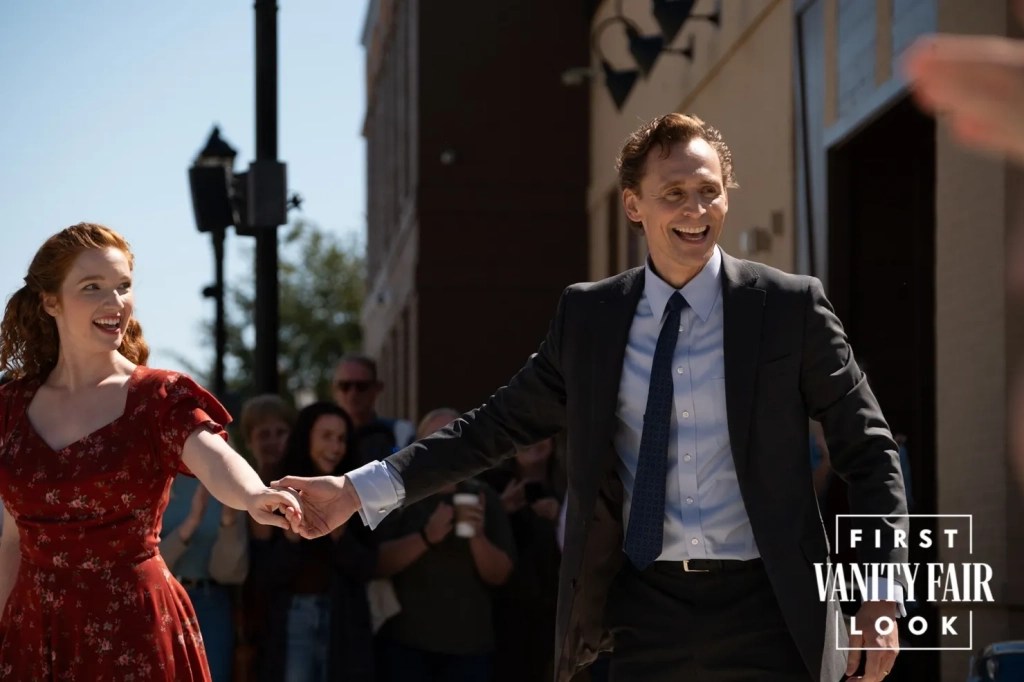
The Life of Chuck is a masterpiece, instantly cementing itself as one of the best Stephen King adaptations of all time. Mike Flanagan delivers a touching, emotional, and cathartic movie that feels like a warm hug and will make you see the world a little bit differently. It was more than deserving of the People’s Choice Award and needs to be seen by everyone when it comes out.
 One Take News